

When 11-year-old Ava built her first robot out of recycled toys, her teacher called it a “distraction.” What they didn’t see? She was teaching herself engineering – one meltdown, one breakthrough at a time.
In tech, the most brilliant ideas often come from the most misunderstood minds. If you’re one of the many parents of neurodivergent kids – raising a gifted child with autism, ADHD, or dyslexia – know this: you’re not raising a problem. You’re raising possibility. You’re raising innovation.
Neurodiverse kids often think differently, process deeply, and see patterns others overlook. While traditional classrooms may focus on behavioral issues or overlook signs of giftedness, the world of technology is where many of these exceptional learners truly shine.
In this guide, we’ll explore why autistic kids, twice-exceptional students, and other neurodivergent children are uniquely suited to thrive in tech – and how parents of gifted children and educators can give them the right support to reach their full potential.
What Is Neurodiversity and Why It Matters for Autistic and Neurodivergent Kids in Tech
Neurodiversity describes the natural differences in how brains function. It includes conditions like autism spectrum disorder (ASD), attention deficit hyperactivity disorder (ADHD), dyslexia, dyspraxia, and Tourette’s. These aren’t deficits – they’re different ways of thinking, learning, and processing the world.
Neurodiverse kids – including many gifted learners – often excel in problem-solving, pattern recognition, and deep focus. But they can struggle in classroom environments designed for neurotypical students. Traditional systems tend to reward quiet compliance, not curiosity. As a result, neurodivergent kids are often misunderstood, mislabeled, or face misdiagnosis, even when their cognitive and academic strengths are clear.
Autistic, Gifted, and Neurodiverse Tech Leaders Who Are Shaping the Future
Let’s spotlight some real-life role models who prove just how powerful a neurodiverse mind can be – especially for autistic kids, gifted students, and parents of neurodivergent children looking for inspiration.
- Bill Gates – Co-founder of Microsoft, widely believed to be on the autism spectrum. Known for his obsessive focus and early signs of giftedness, his deep visual thinking shaped the modern computing world.
- Greta Thunberg – While not in tech, Greta’s diagnosis of autism spectrum disorder is central to her logical thinking and unwavering advocacy for climate science. She’s become a role model for neurodiverse kids who think differently and speak boldly.
- Temple Grandin – A renowned autistic professor of animal science. Her visual mind led to groundbreaking work in humane livestock handling. She’s one of the most visible examples of how autism and giftedness can combine to change entire industries.
- Anne-Marie Imafidon – A highly gifted child prodigy in maths and computer science, and founder of Stemettes. She’s a powerful voice for gifted girls, twice-exceptional children, and neurodivergent students in STEM.
- Samantha Payne – Co-founder of Open Bionics, a company that creates bionic limbs designed with sensory processing issues in mind – helping kids with and without autism access technology that’s truly inclusive.
Each of these gifted people shows that being different isn’t a drawback – it’s often the foundation of brilliance.
Why Neurodivergent and 2e Kids with Autism Spectrum Traits Struggle in School but Thrive in Tech
School is often built for one kind of brain – the kind that sits still, follows instructions, and thrives in quiet, structured classrooms. But that’s not how many neurodiverse kids learn best.
- Kids with ADHD often think quickly, bounce between ideas, and make creative connections that others overlook – traits that are invaluable for problem-solving and fast-paced digital roles.
- Autistic children tend to notice patterns, fixate on detail, and explore topics in remarkable depth – strengths that fit perfectly with careers in software engineering, cybersecurity, and data science.
- Children with dyslexia often shine in spatial reasoning, strategy, and systems thinking – skills that make them naturals in game development, digital art, and AI design.
But because they don’t always fit the expected mold, these gifted and talented students are often misunderstood or mislabeled. Some are seen as disruptive, inattentive, or face behavioral issues, when in fact, they’re simply learning in a different way.
According to The National Autistic Society, 70% of autistic children are in mainstream schools – but many feel misunderstood, isolated, or unsupported, or like they have to mask just to get through the day.
For many of these students, tech education offers a new way forward – one that values their unique thinking styles and helps them thrive without having to fit into someone else’s box.
Top STEM and Coding Tools That Support Neurodiverse and Gifted Kids with Autism or ADHD
Here’s a curated list of platforms and projects that support different types of learners – including neurodiverse kids, gifted learners, and twice-exceptional children with conditions like autism, ADHD, or dyslexia.
- Scratch: Developed by MIT, this block-based programming platform is perfect for visual thinkers and kids who learn best through hands-on experimentation.
- Code.org: Game-based coding lessons using familiar characters from Minecraft and Star Wars help kids with ADHD stay engaged while learning programming logic.
- Tynker: Combines storytelling, animation, and coding – ideal for gifted and talented students who love creative control.
- Minecraft Education Edition: A collaborative platform that supports logic, teamwork, and coding through immersive gameplay – especially great for children with learning disabilities or sensory processing issues.
- Raspberry Pi Foundation: Perfect for curious builders who want to get stuck into real-world projects like weather sensors, music machines, or mini arcade consoles.
- Code Ninjas: In-person coding clubs designed with flexibility and structure in mind. Their programs support neurodiverse children, allowing them to work at their own pace and build real games in a supportive environment. Read the review here.
You can also explore inclusive communities and programs such as CoderDojo, Autistica‘s neurodiversity initiatives, and the National Center for Women & Information Technology – all of which actively support gifted kids, neurodivergent learners, and children with autism spectrum disorder.
Encourage your child to follow their so-called “obsessions.” For many neurodiverse children, deep interests – often known as hyperfocus – aren’t a distraction. They’re a gift. And they could be the first clue to a brilliant future in tech.
How Tech Companies Can Support Neurodivergent Employees and Reduce Misdiagnosis and Behavioral Barriers
Many companies say they want diverse thinkers – but most workplaces are still built around neurotypical norms. For neurodivergent employees, environments with open-plan layouts, fast-changing instructions, and social overload can create daily challenges that reduce school performance-style productivity.
Some companies are finally rethinking that.
- Microsoft’s Neurodiversity Hiring Program focuses on adapting the interview process and providing long-term support for autistic professionals.
- SAP’s Autism at Work initiative now employs over 200 people – showing that inclusive hiring isn’t charity, it’s smart business.
- Ultranauts is a software testing company where 75% of the workforce is diagnosed autistic. Their approach includes flexible schedules, remote roles, and additional support for communication and planning.
These companies don’t force people to fit the system – they adjust the system to fit the people. By offering the right support – from quiet zones to strengths-based training – they unlock the kind of loyalty, innovation, and collaboration that can’t be engineered through standard HR policies.

How Parents Can Support Neurodiverse and Gifted Children on the Autism Spectrum
As a parent, your job isn’t to make your child fit a system – it’s to help them change it.
Many parents of gifted children or those with an autism spectrum disorder face pressure to “fix” what makes their child different. But the truth is, your child’s differences are often their strengths.
Here’s how to support kids who think and learn differently:
- Celebrate your child’s way of thinking – don’t try to “normalize” them. If your child is a 2e child (twice-exceptional), they may need extra support in one area and advanced challenges in another.
- Find mentors or role models who reflect their strengths and differences – especially those who openly identify as autistic, gifted, or neurodivergent.
- Use the tools above to dive into coding, robotics, gaming, or digital art – interests that can unlock your gifted child’s full potential.
- Talk to schools about support options like Education, Health and Care Plans (EHCPs), Individual Education Plans (IEPs), or sensory accommodations. Some gifted students are misunderstood due to masking or behavioral issues – especially girls.
- Challenge gender stereotypes in tech and education – gifted girls and autistic girls are more likely to be undiagnosed or to mask their needs just to blend in.
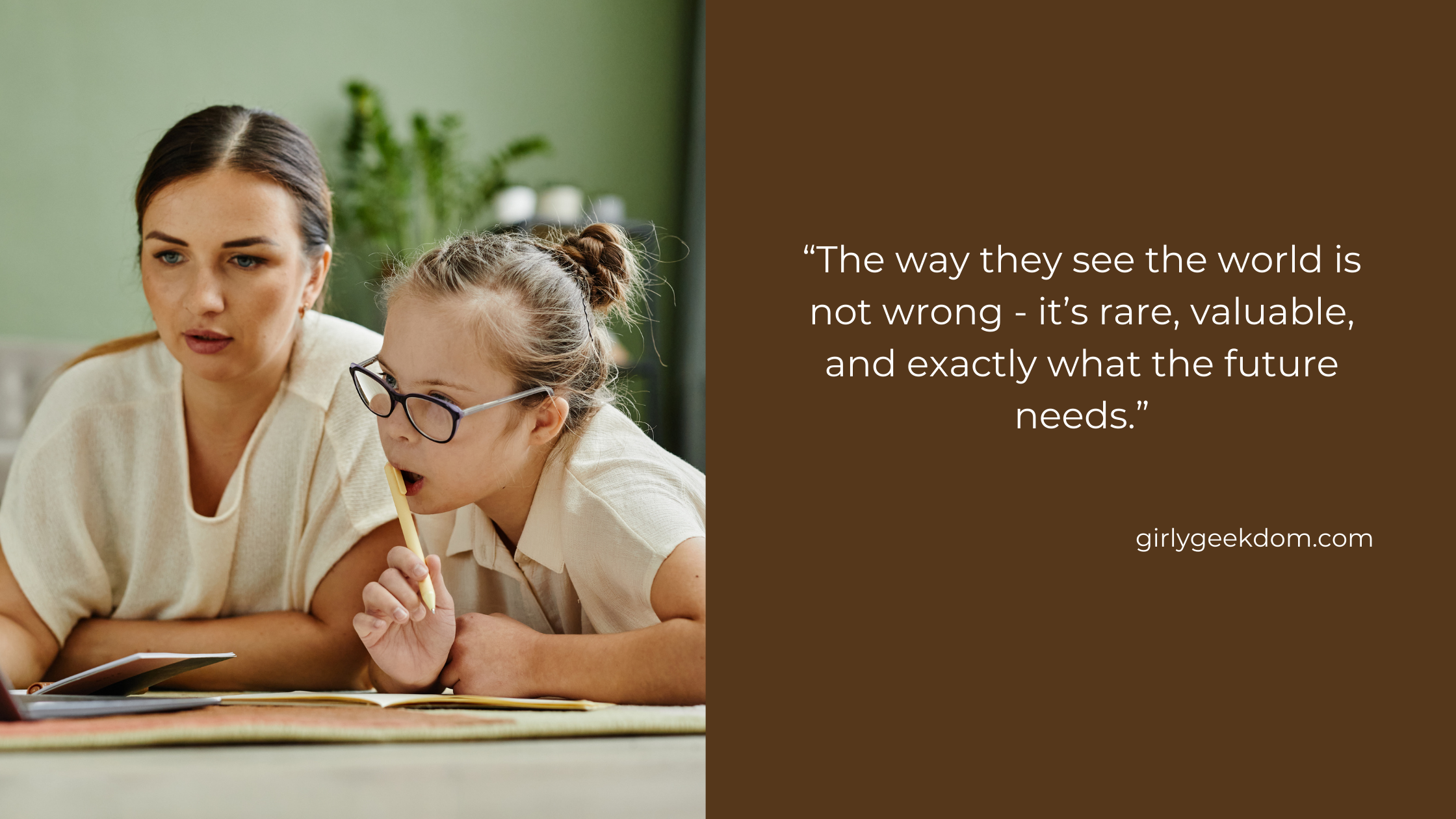
Let your child know this: the way they see the world is not wrong – it’s rare, valuable, and exactly what the future needs.
The Future of Tech Depends on Brains That Think Differently
We’re beginning to redefine what intelligence, creativity, and capability really look like – and it’s long overdue.
Neurodiverse people aren’t just part of the future workforce. They’re already reshaping how we build, design, and solve problems. Many of the most exciting breakthroughs come from minds that don’t follow the usual path – especially those shaped by giftedness, autism, ADHD, or a learning disorder.
If we create inclusive spaces – both physical and digital – where all types of brains are welcomed and respected, we don’t just improve outcomes for individuals. We build something better for everyone.
So whether your child is coding in Scratch, designing a robot from old LEGO sets, or asking deep questions about how the internet works – nurture that spark. It’s not just curiosity.
It’s the beginning of innovation. And every neurodivergent kid who feels seen, supported, and empowered could be tomorrow’s trailblazer.
The tech world doesn’t just need more coders.
It needs different coders.
FAQs: How to Support Neurodivergent Girls, Gifted Kids, and Autistic Students in STEM
Q: How do I know if my daughter is neurodiverse?
Signs might include sensory sensitivities, strong emotional reactions, intense focus on specific interests, social difficulties, or unusually advanced thinking for her age. She might be a gifted girl, a 2e child, or show signs of autism spectrum disorder. Diagnosis should always be done by a qualified professional such as a clinical psychologist or pediatric specialist.
Q: Are there girls-only tech clubs or coding groups?
Yes – and they can be a game-changer for building confidence. Try Stemettes, Girls Who Code, or check for local meetups through Code Club UK. These spaces are especially supportive of gifted and talented students who might feel out of place elsewhere.
Q: How do I talk to teachers about getting support?
Ask for a meeting to review your child’s strengths, challenges, and classroom behavior. You can request a checklist or a formal evaluation. Tools like an EHCP (UK) or 504 Plan (US) can provide extra support for neurodivergent kids, whether they’re diagnosed autistic, have ADHD, or another learning disorder.
Q: My child masks at school but melts down at home. Why?
This is very common – especially for autistic girls or gifted students who feel pressure to act “normal.” Masking means suppressing true emotions or behaviors to fit in. It’s exhausting. Support your child by creating safe, accepting environments at home – and work with the school to reduce social pressure.
Q: What jobs might suit a neurodiverse girl in tech?
There’s a huge range – and it’s growing every year. Many neurodiverse girls thrive in roles like game design, software development, digital art, technical writing, robotics, cybersecurity, AI ethics, and data visualization. Think beyond coding – it’s about matching strengths to purpose.
Want more resources or real-life stories? Visit girlygeekdom.com for interviews, guides, and practical tips on raising future-ready, neurodiverse kids in STEM.
Share this with teachers, carers, and tech leaders – and help build a future where no mind is left behind.
Discover more from GirlyGeekdom
Subscribe to get the latest posts sent to your email.

 GirlyGeekdom